
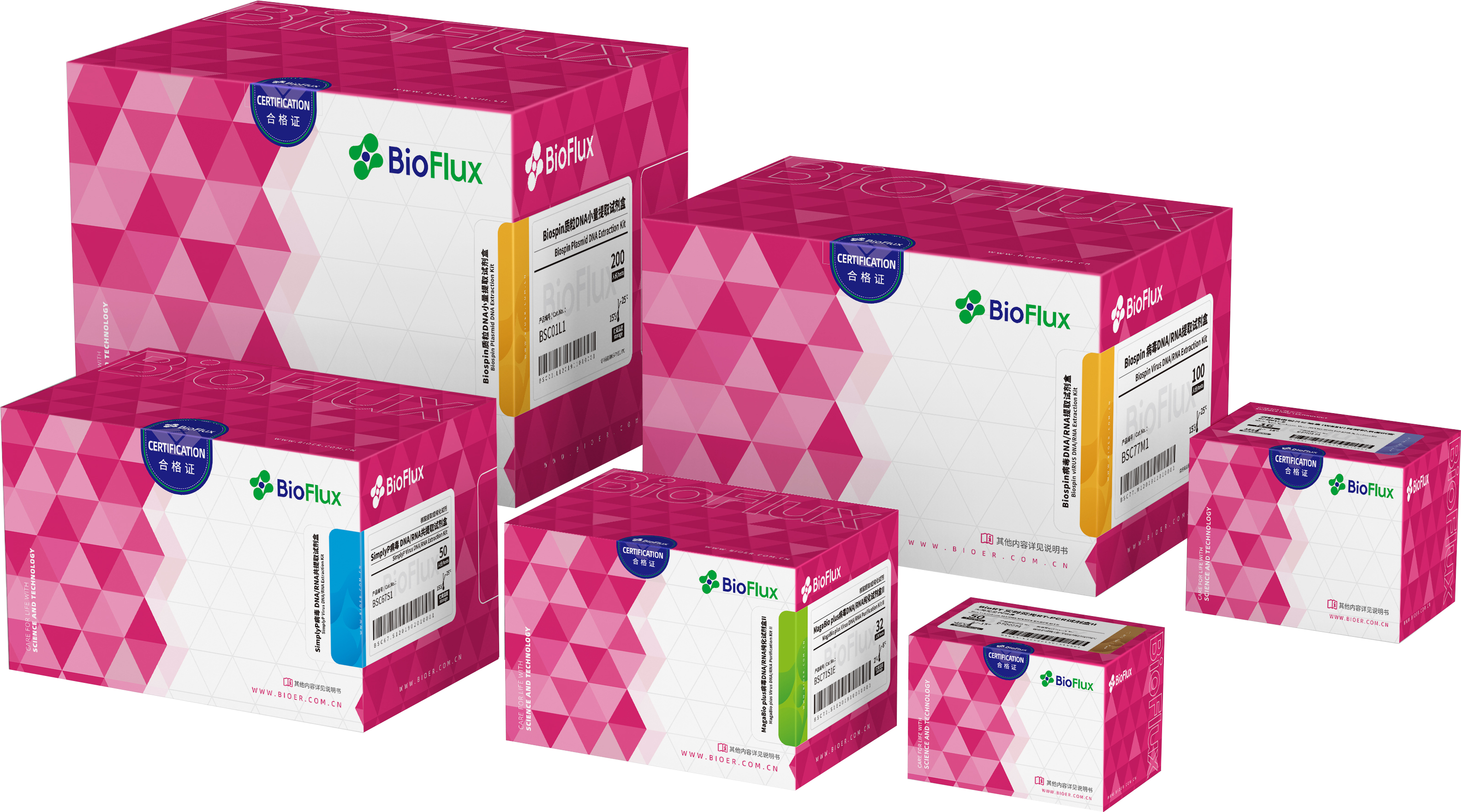
Group B Streptococcus Nucleic Acid Detection Kit (Fluorescent PCR)
Group B streptococcus (GBS) commonly appears in up to 35% of healthy women's reproductive or gastrointestinal tracts. Pregnant women colonized with GBS can transmit the bacteria to their newborns at the time of birth. The detection kit offers high sensitivity and specificity, ensuring reliable results with minimal cross-reactivity. It is easy to use and provides fast turnaround time, making it ideal for clinical laboratories to screen high-risk populations and prevent complications related to GBS infections.
Details
Product Description
Group B Streptococcus Nucleic Acid Detection Kit (Fluorescent PCR) is based onin vitro Real time PCR combining fluorescent probing. Primers and asequence-specific fluorescence probe were designed tailored to CAMP gene of Group B Streptococcus. The probe of Group B Streptococcus is oligo nucleotide attached fluorophores at the 5' end with FAM as reporter and 3’end with quencherIn a meantime, specific primers and probe on basis of human RNase P were developed as internal reference with fluorophores CY5 attached at 5’end asreporter.
Product Features
Fast and Stable: One-step PCR can be used for rapid qualitative detection of 96 samples within 1h.
Strong Specificity: No cross reaction with many common pathogens with the same infection site or similar infection symptoms, such as Streptococcus pneumoniae, Streptococcus pyogenes, Staphylococcus aureus, cytomegalovirus, etc.
Anti-contamination System: UDG enzyme and dUTP to fully degrade possible contamination and avoid false positive results.
Internal Control Included: Human RNase P gene acted as a non-competitive internal control monitor the entire extraction and detection process, ensuring reliability and quality of the results.
Application Field
Group B Streptococcus test
Storage Conditions
-25℃ ~ -15℃ away from light
Specification
| Sample type | Pregnant female vaginal-rectal swab specimens, the specimens are recommended to collected in the perinatal period (≥35weeks) |
|---|---|
| Sensitivity | 200 copies/mL |
| Internal Control | Human RNase P gene (CY5) |
| Precision | CV<5% |
| Serotypes | Ia, Ib, Ic, II, III, IV, V, VI, VII, VIII, and IX |
| Recommended Extraction Kit | BSC86 MagaBio Plus Virus DNA/RNA Purification Kit III |
| Detection time | ≤1h |
| Support Instrument | LineGene 9600 Plus (FQD-96A), QuantGene 9600 (FQD-96C), Automated Nucleic Acid Purification and Real Time PCR System(FQD-A1600), Thermo Fisher ABI7500 |
Ordering
| Cat# | Product Name | Packing size |
|---|---|---|
| BSJ07S1 | Group B Streptococcus Nucleic Acid Detection Kit (Fluorescent PCR) | 24T |
| BSJ07M1 | Group B Streptococcus Nucleic Acid Detection Kit (Fluorescent PCR) | 48T |
| BSJ07L1 | Group B Streptococcus Nucleic Acid Detection Kit (Fluorescent PCR) | 96T |
Related Products
You May Also Like
STI 13-Pathogen Lyophilized Nucleic Acid Detection Kit (Fluorescence PCR)
The STI 13-Pathogen Lyophilized Nucleic Acid Detection Kit (Fluorescence PCR) is used for the qualitative detection and differentiation of thirteen pathogens associated with sexually transmitted diseases. These pathogens include Chlamydia trachomatis (CT), Neisseria gonorrhoeae (NG), Mycoplasma genitalium (MG), Treponema pallidum (TP), Herpes simplex virus 1 (HSV-1), Herpes simplex virus 2 (HSV-2), Ureaplasma urealyticum (UU), Mycoplasma hominis (MH), Gardnerella vaginalis (GV), Trichomonas vaginalis (TV), Haemophilus dacrya (HD), Ureaplasma parvum (UP), and Candida albicans (CA).
STI-6 Nucleic Acid Detection Kit (Fluorescence PCR)
Sexually transmitted diseases (STDs), or infections (STIs), are mainly spread through sexual contact or close genital contact. Transmission may also occur via contaminated personal items like towels. STIs are caused by various pathogens, including viruses, bacteria, fungi, and protozoa.
STI-7 Nucleic Acid Detection Kit (Fluorescence PCR)
Sexually transmitted diseases (STDs), or infections (STIs), are mainly spread through sexual contact or close genital contact. Transmission may also occur via contaminated personal items like towels. STIs are caused by various pathogens, including viruses, bacteria, fungi, and protozoa.